
India restricts subsidised LPG connections for households with piped natural gas (PNG) to ensure equitable distribution and address global energy supply concerns, pushing for faster PNG adoption.
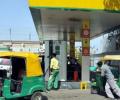
The Indian government has revised its natural gas allocation priorities, placing LPG production alongside CNG and piped cooking gas at the top, due to disruptions in imported gas supplies caused by the conflict in West Asia.

CNG prices in Delhi have been increased by Re 1 per kg, marking the second increase in less than a week, according to Indraprastha Gas Ltd.

The government has mandated that cooking gas LPG supply to households will be discontinued if consumers fail to switch to piped natural gas where such connectivity is available, under a new order aimed at accelerating gas network expansion and reducing reliance on a single fuel.

The government is identifying households with both liquefied petroleum gas (LPG) and piped natural gas (PNG) connections to enforce a ban on dual ownership, aiming to curb misuse and better target subsidies amid global energy supply disruptions.

India significantly increased piped natural gas (PNG) connections in March as the government accelerates the expansion of cleaner fuel networks amid global supply disruptions.
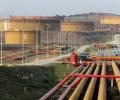
In a significant change to regulations, oil and gas regulator PNGRB has proposed a new policy of how tariffs for pipelines carrying gas to users will be determined, and proposed charging city gas entities selling CNG and piped cooking gas to households at the lowest rates.

The government on Thursday restored liquefied petroleum gas (LPG) supplies to commercial consumers such as hotels, restaurants and other businesses to pre-crisis levels, and lifted sector-specific restrictions imposed during the recent West Asia conflict, in a sign that energy supply concerns are easing as global markets stabilise.

The Indian government has reassured citizens that the country has sufficient reserves of petrol, diesel, and LPG, and that refineries are operating at high capacity despite global supply chain disruptions. They have urged citizens to avoid panic buying and hoarding.

The Indian government has increased measures to secure fuel and gas supplies following the Strait of Hormuz closure, urging citizens to avoid panic buying. Refineries are operating at high capacity, and sufficient stocks of petrol and diesel are available nationwide.

India continues to face LPG supply challenges for the third consecutive week due to disruptions caused by the West Asia conflict, though panic buying is showing signs of easing. The government is prioritising domestic household supplies and encouraging alternative fuel sources.

PNGRB, the oil regulator, which as per its enacting legislation has powers to levy fee, has levied a minimum tax of Rs 2 crore per annum on turnover that companies like GAIL and Reliance Industries earn from selling CNG to automobiles and piped natural gas to households and industries.

The Indian government has doubled the daily quota of market-priced 5-kg LPG cylinders for migrant workers to ensure stable fuel supplies amidst global disruptions. This move prioritises household cooking gas and addresses the needs of migrant workers who often lack regular connections.
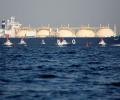
The government should bring natural gas under the Goods and Services Tax (GST) regime to realise Prime Minister Narendra Modi's vision for a gas-based economy and raising the share of the environment-friendly fuel in India's energy basket, an industry body that represents the likes of Reliance Industries as well as state-owned firms, has said. Natural gas is currently outside the ambit of GST, and existing legacy taxes -- central excise duty, state VAT, central sales tax -- continue to be applicable on the fuel. In its pre-Budget memorandum to the finance ministry, Federation of Indian Petroleum Industry (FIPI), which boasts of members from across the oil and gas spectrum, also demanded rationalisation of GST on transportation of natural gas through pipeline as well as on re-gasification of imported LNG to help bring down cost of the environment friendly fuel.

An India-flagged LPG tanker, Jag Vikram, has successfully crossed the Strait of Hormuz following a temporary ceasefire between the United States and Iran, marking a significant development for India's energy security.
After Delhi, CNG price in Mumbai has been hiked by Rs 1.50 per kg and the rate of cooking gas piped to houses by Re 1 due to rise in input costs. Mahanagar Gas Ltd, which retails CNG to automobiles and piped natural gas to households for cooking purposes in Mumbai and surrounding cities, said the increased prices will come into effect from the intervening night of July 8 and 9.

'Historically, India has depended on the Middle Eastern Gulf for nearly 90 per cent of its LPG imports. Shifting to alternative suppliers is not something that can happen quickly.'

Adani Group Chairman Gautam Adani announced a capital expenditure programme of over 2 trillion for Adani Power, aiming for 45 gigawatts (Gw) capacity in five years, including a significant entry into nuclear power with a target of 10 Gw by 2035 through Adani Atomic Energy.

Nath's comments came amid the Congress party's continuous attack on Centre for the recent hike in commercial LPG cylinders and the Aviation Turbine Fuel (ATF).

Qatar, India's largest supplier of imported natural gas, has declared force majeure on deliveries following a halt in production in the wake of an Iranian drone strike -- a disruption that has led to a cut in supplies to Indian industry by up to 40 per cent, sources said.

The reopening of the Strait of Hormuz, following a ceasefire agreement between the US and Iran, is expected to significantly ease India's crude oil supply risks, lower freight costs, and reduce inflationary pressures, as global oil prices have already dropped.
The government has assured citizens that there is no need to panic book LPG cylinders, as uninterrupted supply to households is being ensured despite the ongoing conflict in West Asia.
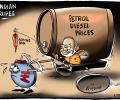
5 commodities namely crude oil, natural gas, petrol, diesel, and aviation turbine fuel (ATF) were kept out of GST's purview given the revenue dependence of state governments on these sectors.

Indian oil marketing companies are incurring significant losses, selling petrol at a Rs 14 per litre loss and diesel at Rs 18 per litre, as elevated global crude oil prices, exacerbated by the West Asia crisis, outpace capped retail fuel rates, according to rating agency Icra.
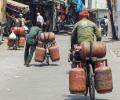
'If 5% of the total revenue was spent on LPG (pre-war), it is now expected to double. The overall food cost in restaurants is expected to rise by 4-6%.'

India possesses two months of fuel stockpiles and faces no supply concerns despite global energy disruptions, according to Oil Minister Hardeep Singh Puri. However, state-run fuel retailers are incurring losses of up to Rs 1 lakh crore in a single quarter due to elevated crude prices and unchanged retail fuel prices, raising questions about the sustainability of these losses.

The new Index of Industrial Production (IIP) series, which shifts the base year from 2011-12 to 2022-23 and is scheduled for release on June 1, will, for the first time, track rare earths and minor minerals, piped natural gas (PNG), and water supply, sewerage and waste management.

'The West Asia or the Gulf crisis has shown that what we develop as national infrastructure when things are not as bad as they could be, we forget to plan for adversities.'
India's state-run oil marketing companies (OMCs) are projected to incur under-recoveries of approximately Rs 80,000 crore on liquefied petroleum gas (LPG) sales in FY27 if current loss levels persist, according to rating agency Icra.
Petrol and diesel prices have been increased by Rs 3 per litre each, marking the first hike in over four years, as state-run fuel retailers pass on some of the impact from surging global crude prices, which have been exacerbated by the Iran war.
Prices of natural gas, which is used to generate electricity, make fertiliser and is converted into CNG to run automobiles, is likely to rise to record levels at the rate review scheduled this week, sources said. The government-dictated price for natural gas produced in the country is to be revised on October 1. After factoring in the spike in energy prices witnessed in recent months, the rate paid for gas produced from old fields such as of state-owned Oil and Natural Gas Corporation (ONGC) is likely to rise to $9 per million British thermal units from current $6.1.

India's net oil import bill could rise by $56 billion to $64 billion annually assuming global crude averages $110 to $115 per barrel in FY27.
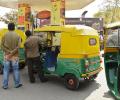
A major gas pipeline damage has disrupted CNG supply in Mumbai, leading to long queues at refuelling stations and affecting autorickshaws, taxis, and other CNG-run vehicles. The disruption is expected to impact transport availability throughout the day.
The government has slashed allocation of natural gas used for LPG production, and diverted the low-priced fuel to city gas retailers like Indraprastha Gas Ltd and Adani-Total Gas Ltd to meet a part of their requirement for CNG/piped cooking gas supplies, according an official order. The government had in October and November last year cut supplies of low-priced natural gas coming from old fields such as Mumbai High and Bassein fields in the Bay of Bengal, to city gas retailers by as much as 40 per cent in view of limited output.

A disruption in the supply of LPG cylinders caused by tensions in the Strait of Hormuz is impacting Indian kitchens, leading to restaurant closures, price hikes and a surge in demand for electric cooktops.

Prime Minister Narendra Modi convened the Cabinet Committee on Security to address the impact of the West Asia conflict on Indian citizens, focusing on safeguarding them from the conflict's effects and ensuring the smooth flow of essential supplies.
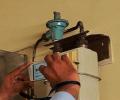
The price of cooking gas piped to household kitchens in the national capital and adjoining cities was hiked by Rs 2.63 per unit on Friday, the second increase in rates in less than two weeks. Piped cooking gas in Delhi will now cost Rs 50.59 per standard cubic meter, as against Rs 47.96 previously, according to Indraprastha Gas Ltd - the firm that retails CNG to automobiles and piped cooking gas to households in the national capital and adjoining towns. The increase is to "partially offset the increase in input gas cost," IGL said in a tweet.

Modi govt is committed to extend the piped gas networks in the country to 30,000 kms in the next 15 years as against the 15,000 kms network today

Qatar has halted liquefied natural gas (LNG) production after its facilities came under attack amid the ongoing West Asia conflict, disrupting supplies to India and squeezing feedstock availability for key domestic sectors.
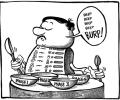
Mumbai hotels and restaurants are facing potential closures due to a critical shortage of commercial LPG cylinders, with similar disruptions reported across India. The crisis stems from revised government priorities for domestically produced natural gas, impacting the hospitality sector and potentially affecting tourism.
